

Cypress Tree Service Blog
Is my tree at high risk of crashing down? Watch out for these warning signs
Cypress Tree Service • September 8, 2026
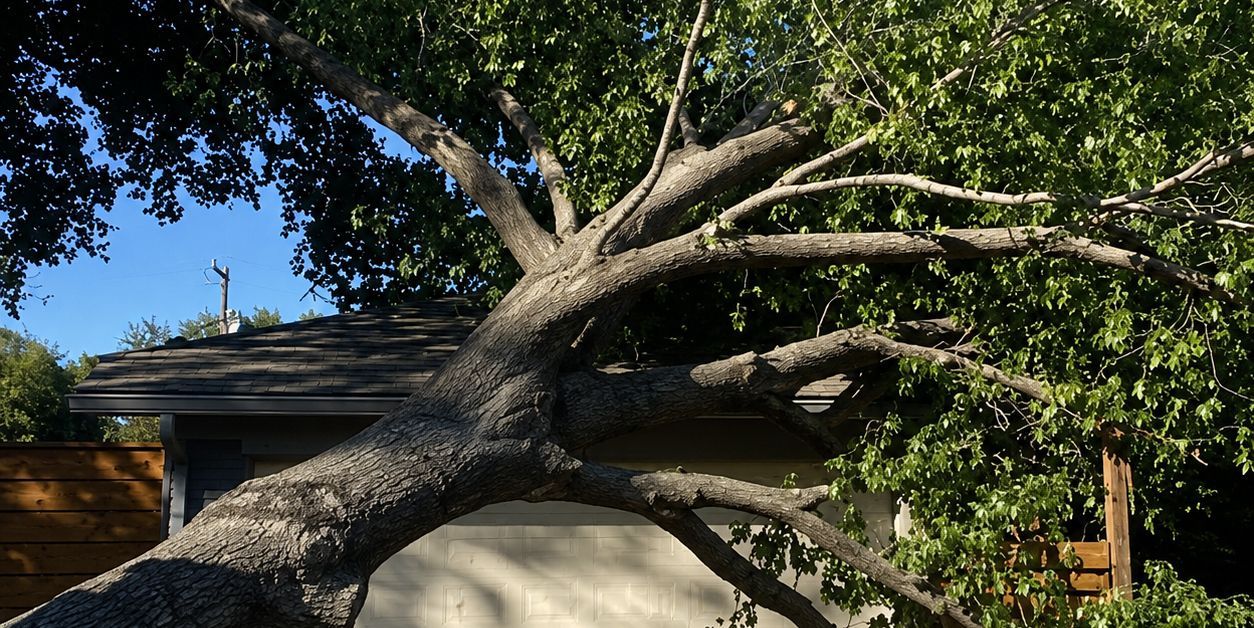
A tree with serious structural problems can become a significant hazard. Dead, damaged, and unstable trees may eventually lose large branches or fall entirely, potentially damaging homes, vehicles, utility lines, and other property. Recognizing warning signs early can give homeowners an opportunity to have a dangerous tree professionally evaluated and removed before it crashes down unexpectedly. At Cypress Tree Service, we provide expert hazardous tree removal in the greater Byram Township, NJ area. Here are four signs that a tree on your property may be at high risk of collapsing.
A Noticeable Lean
A tree that suddenly begins leaning or develops a significant lean toward a home, driveway, sidewalk, or other frequently used area deserves professional attention. While some trees naturally grow at an angle, a recent or worsening lean can indicate root damage, soil instability, or structural weakness. Changes in the surrounding soil, particularly after storms or flooding, can also affect a tree's stability.
Large Cracks in the Trunk
Deep cracks or cavities in the trunk can indicate serious structural weakness. Cracks may develop after severe weather, from the weight of heavy limbs, or as a tree deteriorates. A significant crack can compromise the trunk's ability to support the tree's weight. If you notice large vertical cracks or areas where the trunk appears to be separating, have the tree evaluated by a professional.
Visible Root Problems
A tree's root system provides much of its stability, so damage around the base of the tree can be particularly concerning. Exposed, damaged, or decaying roots may compromise the tree's ability to remain securely anchored. Construction activity, soil erosion, disease, and severe weather can all contribute to root problems. Fungal growth near the trunk base can also warrant professional evaluation.
Significant Decay or Hollow Areas
Decay can weaken a tree from the inside, sometimes leaving substantial portions of the trunk compromised while the exterior still appears relatively intact. Large cavities, soft or crumbling wood, peeling bark, and extensive fungal growth can all indicate deterioration. Because internal decay can be difficult to evaluate from the ground, professional assessment is important when these warning signs are present.
Hazardous Tree Removal in Byram Township, NJ
For expert
tree removal in Byram Township and the surrounding area, contact Cypress Tree Service at
973-358-2734. Feel free to give us a call to
arrange an estimate for tree services in greater Byram Township!